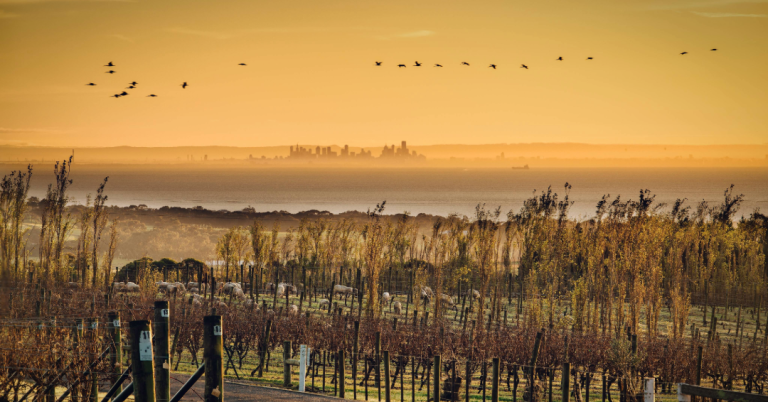
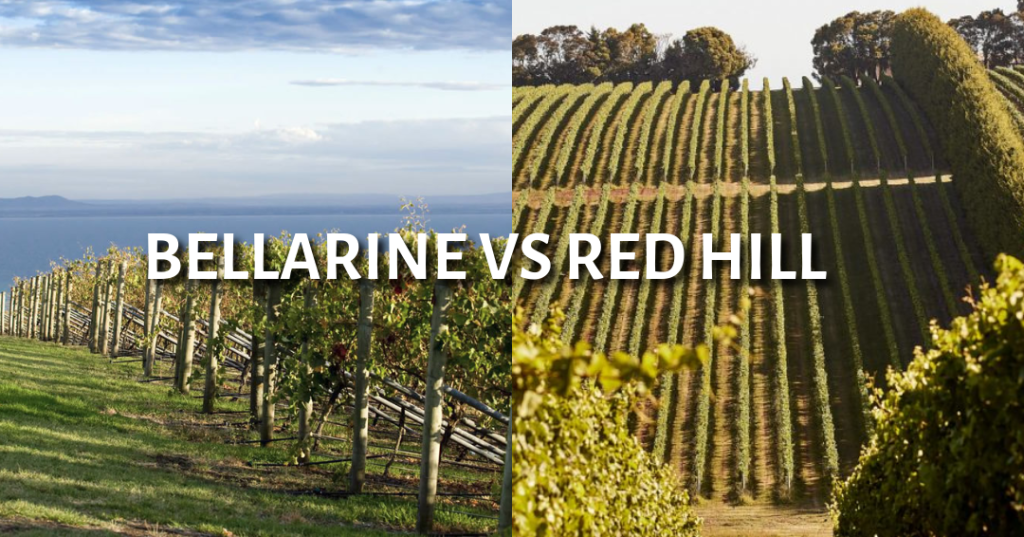
Though only 30 kilometers of the Port Phillip Bay separate the Bellarine Peninsula from Red Hill, these two wine regions are worlds apart in terms of their growing conditions and the wines they produce. You may know Bellarine Peninsula for their peppery Pinot Noirs, whilst Red Hill for their balanced Chardonnays.
Our winemaker recently shared insights into how the distinct weather patterns, soil composition, and microclimates of these regions contribute to the unique characteristics of their wines.
The Climate Contrast: Bellarine Peninsula vs. Red Hill
Red Hill, known for its slightly cooler climate, it receives about 30% more rainfall than the Bellarine Peninsula. This difference in temperature and precipitation significantly impacts the grape-growing process in both regions. Red Hill’s cooler conditions, combined with its higher rainfall, lead to a slower ripening process, often resulting in wines with more pronounced acidity. In contrast, the Bellarine Peninsula’s warmer climate allows grapes to ripen more fully, contributing to wines with slightly riper flavours.
Soil Composition: The Foundation of Flavor
While both regions share a volcanic origin in their soils, the age and composition of these soils set them apart. Red Hill’s soils are much older and deeper, contributing to the region’s lush vine canopies and fuller grape bunches. These older soils, rich in iron and well-oxidised to a reddish hue, are a stark contrast to the younger soils of the Bellarine Peninsula. Here, the soils are still black, high in iron content but yet to oxidise, which affects the vigor of the vines and the overall character of the wines produced.
The Role of Microclimate and Harvest Timing
Another key difference between the regions lies in their exposure to the elements. Red Hill is more sheltered from winds and heavy rain, which, when combined with its deeper soils, leads to larger vine canopies. However, in cooler, wetter years, Red Hill’s vines can struggle with fruit set, often resulting in smaller crops compared to those on the Bellarine Peninsula. This microclimate also affects the timing of the harvest. Generally, Red Hill’s grapes are harvested one to two weeks later than those in the Bellarine Peninsula, leading to different flavour profiles and acidity levels in the finished wines.
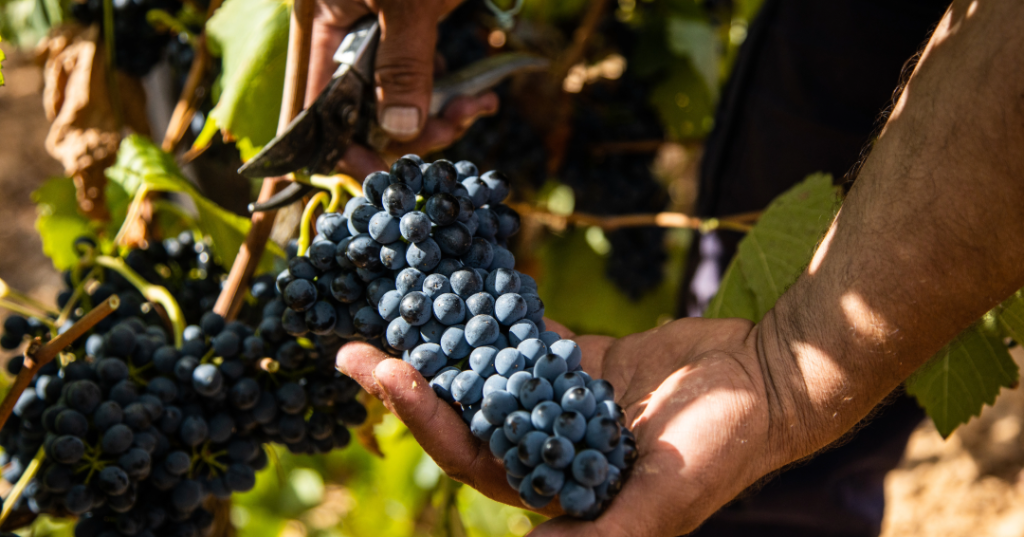
In summary, while the Bellarine Peninsula and Red Hill may be close in proximity, their unique climates and soils create wines with distinct characteristics. The Bellarine Peninsula, with its slightly warmer temperatures, younger soils, and earlier harvests, tends to produce wines with riper flavors. Meanwhile, Red Hill, with its cooler climate, older soils, and later harvests, offers wines with higher acidity and a different flavor complexity. These differences highlight the beauty of regional diversity in winemaking, where even small variations in climate and soil can lead to a world of difference in the glass.